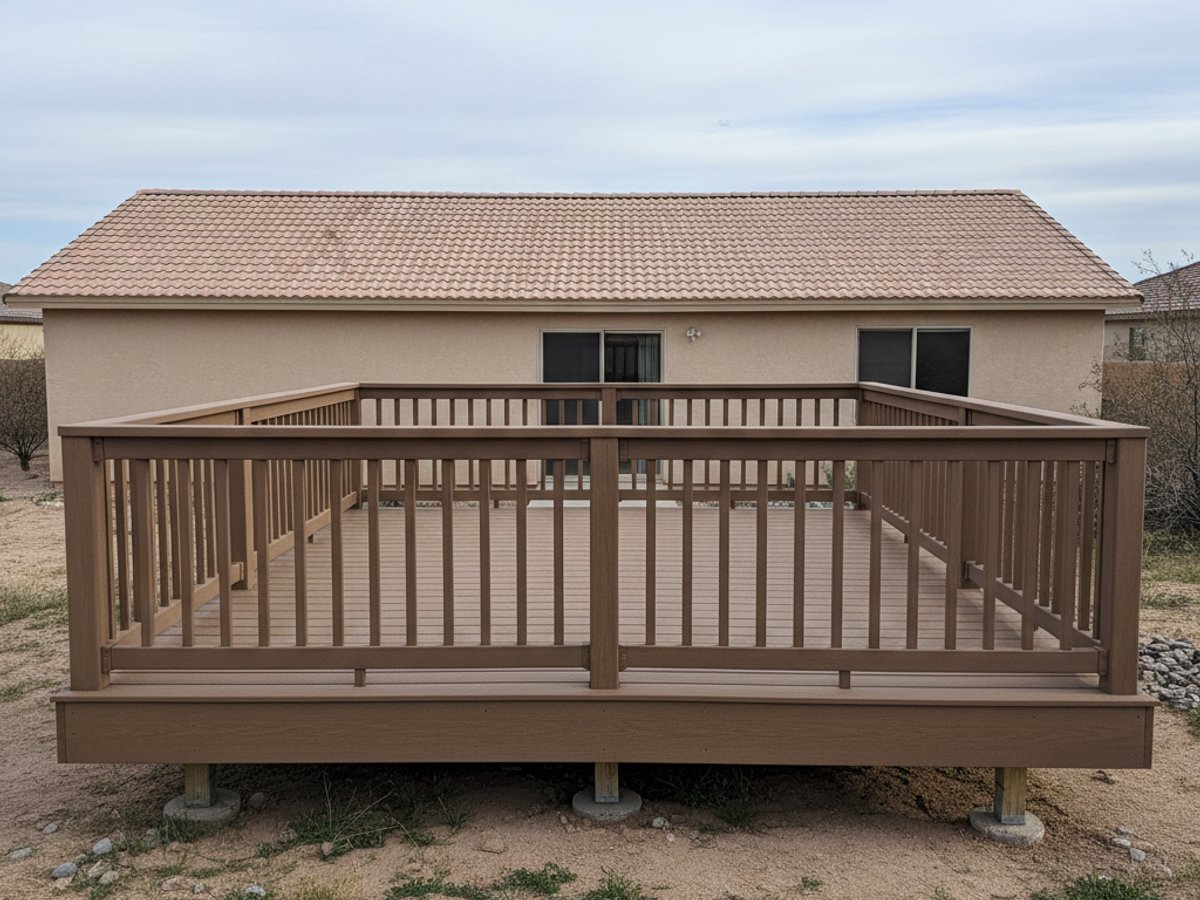
Anyone with a truck and a nail gun can call themselves a deck builder. Henderson has a lot of them right now, because the new subdivisions out toward Cadence and Inspirada keep pulling permits and word travels. Some of these outfits do solid work. Some of them will pour a footing on top of undisturbed caliche without breaking through it, hand you an invoice, and be gone before the deck racks sideways two summers from now. Here's what actually separates the two, and it has almost nothing to do with how nice the sales visit was.
Ask who's pulling the permit, not just who's swinging the hammer
Almost any deck attached to the house needs a permit through the City of Henderson (or Clark County, if you're in an unincorporated pocket nearby). This isn't a technicality. A permitted job gets a footing inspection before concrete goes in, a framing inspection before the boards go down, and a final inspection before it's considered done. That's three separate points where a mistake gets caught before it's buried under decking. A builder who tells you permits are "a hassle" or "not really needed for a small deck" is telling you he doesn't want anyone checking his footings. If your deck sits more than 30 inches above grade, code requires a guardrail, and that gets checked too. Ask to see the permit number once it's pulled. It should be in your name or the contractor's license number, and you should be able to look up the inspection history yourself.
If you're in a community with an HOA, and a lot of Henderson is, from Green Valley Ranch to Anthem to MacDonald Highlands, you'll likely need architectural approval before the permit even gets submitted. That review usually wants a site plan, material samples or a color, and sometimes a note on how far the structure sits from the property line. A builder who's worked in your neighborhood before will already know what your HOA wants to see and won't burn three weeks finding out the hard way.
What's actually happening below the deck
Valley soil out here is mostly sand and gravel over a layer of caliche, that hard, cemented calcium deposit that can run a foot or more thick a couple feet down. A proper footing has to punch through that layer and bear on solid ground below it, usually 12 to 18 inches down depending on the post load and the engineer's spec. That takes an auger with a rock bit or a jackhammer, and it takes longer than digging in plain dirt. If a bid seems low compared to everyone else's, ask how they're handling footings. A crew that skips the rock and sets a post on shallow, disturbed soil will get away with it for a while. Then a monsoon storm in August saturates the ground around a post that was never properly seated, and the deck develops a lean.
We don't get real freeze-thaw cycles here the way colder states do, maybe a handful of nights a year dip near freezing, so frost heave isn't the threat. The threat is footings set in loose fill, or set too shallow because it's faster.
The ledger board is where most failures start
If the deck attaches to the house, the ledger board bolted to the rim joist is doing more structural work than almost anything else on the project. It should be through-bolted or lag-screwed at 16 inches on center, with proper flashing behind it so water can't wick into the house framing. Henderson's summers are dry, but the monsoon season, roughly July through September, brings short, hard downpours that drive water sideways against a house wall. A ledger that was just nailed on, or one with no flashing, is exactly how you end up with rot in the rim joist that nobody sees until the deck starts to pull away from the house. Ask specifically how they're attaching the ledger. If the answer is vague, that's your answer.
Material choice matters more here than most places
Sun exposure in Henderson is brutal on decking. Surface temperatures on dark-colored composite can hit 150 to 160 degrees on a June afternoon, which is uncomfortable bare-footed and also means the material needs proper expansion gaps, usually around 1/8 inch between boards, or it'll buckle. Wood decking, cedar or pressure-treated pine, fades and checks fast under this UV load and typically needs restaining every year or two to stay protected, not the four or five years you might get in a milder climate. A builder should tell you this upfront rather than let you find out after your first summer. If composite is in your budget, ask which brand and whether it carries a fade warranty specific to high-UV climates, because not all of them do.
Red flags worth walking away from
- A large deposit upfront, more than a small percentage of the job cost, before any material has been ordered.
- No written contract with a materials list, start date, and payment schedule tied to actual milestones.
- A verbal promise that "we don't need a permit for this size." Check that against the city yourself.
- Reluctance to give you a current Nevada contractor's license number. You can verify it against the state board's records in a few minutes.
- No mention of soil conditions, footing depth, or ledger attachment when you ask direct questions about how the deck will be built. Vague answers on structure usually mean vague work on structure.
None of this means every job needs to be complicated. A straightforward 12x14 composite deck off the back of a single-story house in a newer subdivision is a very different scope than replacing a rotted 25-year-old wood deck in an older Pittman-area neighborhood where the original footings might not meet current code at all. A builder worth hiring should be able to tell you which situation you're in after one walkthrough, and explain why the price reflects it.
If you want a second opinion on a bid you've already gotten, or you're starting from scratch and want someone to walk the yard with you first, that's the kind of conversation we have every week at Majestic Deck Solutions. Bring the questions above. A builder who answers them straight is worth your time, and one who dodges them just saved you a headache down the road.